Friday, 8 July 2011

Chicken mesh and plywood radio/wifi reflector dish.

One of the first problems I had to solve staying in the valley in New Zealand was how to get internet into the place. There was dialup, but only ran at about quarter speed of dialup, and even then dropped out half the time. There was also supposed to be a pretty high tech microwave repeater link going in over the hill, but when I arrived that was still in the planning phase after a year, so I elected not to pin my hopes on it.
My father had the idea of some kind of reflector with a Telecom (unfortunately the only mobile provider in the area, my god do they suck, don't even get me started) 3G mobile USB modem dongle thing. To test the principle we did a lap of the community with a borrowed dongle and a frying pan, and managed to get a basic connection within ten minutes of hunting.

So, confident that it would work with a larger reflector my wwoofers and me set about making this:


and, because no one had told us about the spare jigsaw we could've used, all the curves of which were cut with this:
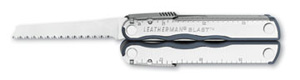
A process which nearly killed all four of us.
Use a jigsaw.


But the dish works beautifully. We didn't even bother aiming or optimising it, just chucked it out, pointed at a tree, with the dongle kind of in there somewhere, peaked out at over 100 kilobytes per second. Nearest cell phone tower was I think about twelve kilometres away, down a rather bushy river valley.

Cost about NZ$20 in materials (plywood, mesh, cable ties, screws), took a couple days to make, but really only because of the lack of proper power tools.

And in the interest of open source, here's the schematic: (click for large view and or download the jpeg)


Construction is pretty simple.

First, mark out the templates on plywood. You'll need 4 of the red one, 4 of the blue one, and 2 of the green.This is if you want to make the 1.5 square meter dish, you'll need to scale the numbers for different sizes.

To draw the parabolas the easiest way is to get yourself some light chain. When a chain hangs it makes a catenery curve, which is reasonably close to a parabola.
1. Mark off a length of chain as described on the template (135 cm for the blue, 160 for green).
2. Attach that length to the ply at the points marked, making sure they are the right distance apart.
3. Spraypaint over the chain to mark it's curve.

Cut out the templates with a jigsaw or similar.

Slot them all together, like so:


The easiest way to firmly attach everything is just drill some holes in apprpriate places and cable tie it all togrther.

Then attach your chicken mesh. If you're using this to receive 3G mobile/internet signal you'll want to have the mesh size no larger than 40 mm diameter. We figured that out using wikipedia and maths.

1. Drill 4 or 5 holes in the ply per gap, near the curve where the mesh will be attached.
2. Get yourself a bunch of cable ties.
3. Cut off a rectangle of mesh to cover half the dish.
4. Press the mesh into the cradle so that the point halfway along one side sits right in the middle.
5. Attach this point with a cable tie.
6. Work your way out in an expanding circle, pressing the mesh into the cradle and attaching with ties until the whole thing is locked down, including the circle perimeter. Don't worry about getting this perfect, it's not a mirror, and is pretty forgiving.
7. Repeat for the other half of the dish, overlaps are fine, but you can trim them off if you like.

Now attach two lengths of string tight from the sides of the circle, so you know where your centre is, and can attach your dongle/antenna/mobile there.

You're done!

Chuck it somewhere appropriate.

You can download the 3d model and schematics here:
Rhino3D 3dm file 203 kB
Google Sketchup 3DS file 39 kB

If this was helpful in some way, please let me know.

Saturday, 2 July 2011

Not sure if it'll be of use, but if any of you use CAD, here is the full 3d model of the most recent solarflower prototype.
Versions:
3dm - Rhino3d file, what it was built in so most detailed.
http://www.solarflower.org/store/solarflower_02-07-11_rhino3dm.zip

iges - nurbs surfaces only, so missing 12 threaded bolt objects.
http://www.solarflower.org/store/solarflower_02-07-11_iges.zip

obj - low resolution polygon version. Quick to view but lowest quality version.
http://www.solarflower.org/store/solarflower_02-07-11_obj.zip

 3ds - same poly version as above, smaller file, and I'm pretty sure you can load this directly into Google Sketchup (free and easy 3d package/viewer)
http://www.solarflower.org/store/solarflower_02-07-11_3ds.zip

Wednesday, 29 June 2011

The website is up! Still very much a work in progress, but it's there. Let me know what you think...

http://solarflower.org/

Tuesday, 21 June 2011

Good lord, I have been terrible with keeping this blog up to date, I never even mentioned the first free construction workshop.


About ten people involved, three days to source materials and tools, six days to complete, NZ$110 total cost. Thanks to the Riverside community for hosting and making available the workspace. It was originally going to be taking place at the Tui community over in Golden Bay, but that fell apart at the last moment while I was attending the New Zealand national permaculture hui at Riverside, so I was luckily able to lash something together there on the fly. It actually turned out a stroke of luck, as trying to do all this over in Tui would've been a nightmare due to lack of access to people and resources.
So in case you haven't heard the festival trip has been cancelled due to lack of funds.
But fear not! The SolarFlower World Tour will still of course be happening, just now after the summer and not involving a vanload of hippies touring Europe's festivals all summer for free.
Oh well.

So what I'm doing instead, at least for the next couple of months is:
http://urbangreenhouse.blogspot.com/2011/06/announcing-paris-urban-farming.html

setting up an urban farming collective in Paris. Because why not.


So if you're around, let me know. We can build some greenhouses.

I may end up doing another construction workshop while I'm here, and definitely have to get the now infamous tutorials finally completed, but otherwise generally I'll be posting updates to the greenhouse blog until I get back into the solar, probably in Turkey round Octoberish(?)

Friday, 27 May 2011

IndieGoGo is go!

The crowdfunding project is now live, and can be found here: http://www.indiegogo.com/The-SolarFlower-World-Tour-Europe

The aim is to raise €2000 by the first of July to cover any and all costs of the festival trip. There will also be a €100 salary per participant, for the duration.

So just to sum up: if you want, you can join us touring a bunch of festivals and communities, building and supporting the Solarflower project and other interesting stuff, it will all be completely free, and you be paid for your time.

If you are psychologically capable of perceiving anything more awesome, or have something better to do with your time, I envy you.

An important note about the crowdfunding thing; if we don't reach the target I'll be making up any shortfall from the Solarflower kitty, which is my pocket. This is so that you can rest assured that this trip is definitely happening, regardless. (But doing so will eat in to my funds and probably cut short The Solarflower World Tour, after I leave Europe.)

Thursday, 19 May 2011

SolarFlower is seeking collaborators for a free European festival roadtrip.

The SolarFlower is a free and open source solar device which tracks the sun during the day and collects energy in the form of heat, which can then be used to run various applications such as water heating and purification, electricity, cooking, biochar, biodiesel, etc.
It can be made from recycled materials and common household items using very basic tools and skills, and there will be detailed animated tutorials on how to construct and use the device and its applications.
Over the next few years I plan to travel with the project, working with local communities and NGOs, giving free workshops and working in with people on how to build and develop this technology and others.


More information at http://www.solarflower.blogspot.com/
Facebook group: https://www.facebook.com/home.php?sk=group_184038684971498&ap=1
Facebook event: https://www.facebook.com/event.php?eid=166441523415416

First though I want to spend the summer touring festivals and eco-communities around Europe, and I need three people to join me, as well as a van or other transportation.

The plan is this:
~Touch down in Europe around mid June.
~Hold a free workshop constructing one or two of the device, as well as a basic shower unit.
~Load it all onto a trailer.
~Tour the whole thing around any festival that will offer us admission in exchange for free hot showers for their patrons and supporting the project.

What you need to bring:

Technical requirements:

None. If you can physically hold a hammer you are fully equipped to help construct the device.
Being able to drive would be helpful.

Financial requirements:


UPDATE:
We now have a crowd funding project through Indiegogo.com ( http://www.indiegogo.com/The-SolarFlower-World-Tour-Europe ) to pay for this whole trip, as well as a €100 salary per participant for the duration. If this goal is not met I'll be topping up the difference from the Solarflower travelling fund, ie my pocket.

So not only will all this cost you nothing, you'll actually be paid to do it.

Practical requirements:

Tent, sleeping bag, etc. Whatever you'd normally take on a roadtrip. One person will need to supply the van /station wagon /car. Preferably something comfortable with good mileage and that won't break down. You will need to make your own way to the initial meeting point, probably at this stage northern Germany.
Also, I'll be too busy to do the work of approaching festivals etc for free entry, so someone else(s) will need to take on this task.

Personal requirements:

Must be a nice, easy going person who likes roadtrips, festivals and summer. Prior experience with social / environmental / energy projects is not required.

What you need to do to apply:


Send an email to solarflower.org@gmail.com with some information about yourself and a quick basic video. I know self promotion is difficult, but so is trying to choose three people you haven't met to share the summer with.

Any and all finer details will be arranged by the group.

And please forward this on to anyone you think might be interested. There's now less than a month to arrange all this, so the more people I can reach the better.

Thanks,

Daniel.

Thursday, 10 March 2011

Well, the main news is that the device now works and is happily tracking the sun as we speak. I still have to complete the reset mechanism and heat tank, but these are (touch wood) vastly less involved than the tracking system and collector and will be lashed together when I'm back in New Zealand next month. I'm aiming to give my first free workshop somewhere in Golden Bay, maybe around the end of April.

Video evidence!!


Should point out that the wobbliness is not due to tracking error; the gearing is currently set a bit looser than it needs to be, and the wind messes with it. Easily fixable.


In other news, the Facebook page is changing over to a group, and can be found here:

https://www.facebook.com/?ref=logo#!/home.php?sk=group_184038684971498&ap=1


Feel free to pop in.
Also, www.solarflower.org will hopefully be up and functional in the near future.

Wednesday, 26 January 2011

Wow, slack on the updates. The last pieces of the device are being put together now, I'll have media once there's something interesting to photograph.

Thursday, 18 November 2010

This is a design I sort of threw together one afternoon thinking about the absolute easiest and cheapest way to make a greenhouse, ideally for farming in cities and favella type environments.

It's just three tripods together in a triangle, wrapped in some ultra cheap plastic such as transparent mulch film, which some farmers throw literally kilometres of away each year.


It's arbitrarily scalable, the one pictured would have a 110 m2 footprint, giving about 320 m2 growing area. It'd also tie in well with aquaponics and similar.

I'll have a look at getting a working group together here in Perth, leave most of the work with them while I get on with the solar thing.

It'll largely come down to what land can be found, but as the thing will be somewhat moveable, getting kicked out won't be such a big issue.

Updates on this will appear on http://urbangreenhouse.blogspot.com/

Tuesday, 16 November 2010


A few components still missing and a bit hacked together, but pretty much working.

Cute, no?