3D maps of the Open Source Ecology Europe Extremadura location. At some point I'll be doing overlays for these, such as slope angle, insolation, etc.
Wednesday, 18 January 2012

Monday, 16 January 2012


Back in Madrid now after checking out the first potential Open Source Ecology Europe living and project space in Extremadura. Got a bit of data and information about the place which I'll be posting over the next couple of days. Here's the first of it: (These aren't the best quality, but you'll get the idea.)
On the flat area in the bend of the creek. With good soil and access to water, likely the best place to start farming. (You'll need Quicktime, available here: http://www.apple.com/quicktime/)
http://www.solarflower.org/stuff/extr_flat_pano1.mov
On the top of the rise. Flat ground, good drainage, good place to build structures. Nice tree. http://www.solarflower.org/stuff/extr_hilltop_pano1.mov
Access road front gate. http://www.solarflower.org/stuff/extr_road_pano1.mov
On the flat area in the bend of the creek. With good soil and access to water, likely the best place to start farming. (You'll need Quicktime, available here: http://www.apple.com/quicktime/)
http://www.solarflower.org/stuff/extr_flat_pano1.mov
On the top of the rise. Flat ground, good drainage, good place to build structures. Nice tree. http://www.solarflower.org/stuff/extr_hilltop_pano1.mov
Access road front gate. http://www.solarflower.org/stuff/extr_road_pano1.mov
Wednesday, 2 November 2011
Looking for a crew of coders wanting to do something of value.
Basically if you're familiar with Couchsurfing.Org's couchsearch engine... that's what we need an open source version of.
We're setting up various networks and infrastructures around Europe and the world, as well as databasing resources, but what's currently missing is a nice simple engine for filtering the data by geography, profile information, keywords etc.
If you know anyone interested in getting involved with something like this, please let them and me know.
This is important.
Thanks!
Basically if you're familiar with Couchsurfing.Org's couchsearch engine... that's what we need an open source version of.
We're setting up various networks and infrastructures around Europe and the world, as well as databasing resources, but what's currently missing is a nice simple engine for filtering the data by geography, profile information, keywords etc.
If you know anyone interested in getting involved with something like this, please let them and me know.
This is important.
Thanks!
Monday, 10 October 2011
Thursday, 6 October 2011
So here's the first finished tutorial animation.
The other five are rendering, when they're done I'll post them all with step by step text descriptions to the website. Hopefully that'll be finished by the end of the month.
In other news; I've been in Leipzig the last three weeks since leaving Ireland, staying with some friends and checking what's up.
Short version: not much. Bunch of housing projects and various volkskoche (people's kitchens) each night, found a weekly juggling jam, been hearing about a couple food production projects... Not nothing, but was hoping for slightly more.
It is insanely cheap here tho, walked past one of thousands of abandoned buildings the other day, big stone tenement, for auction with a reserve of €9,000. I don't think it sold. If you come here with a business plan the city will give you free office and work space. They're that desperate.
So if you're around, and want somewhere to get something of the ground, you could do worse.
Saturday, 3 September 2011
Just a quick update so yall know what's up. I've been in Ireland, wwoofing on a farm in county Cork last couple weeks while the construction tutorials continue to render and I get my breath back from the last two years' work hanging out with some much beloved friends from Edinburgh. On the 13th I'm back over to Germany, either Leipzig or the place I was last year in Saxony Anhalt to spend not more than a little time playing round with a couple ideas I want to test the overall viability of. Namely a very simple dehumidifier (Irish houses are staggeringly badly built) and more importantly a liquid piston magnetohydrodynamic steam generator (I've been practicing saying that) for use with the solarflower. That one's going to be of extreme interest if it works out, but I'm only looking for a proof of concept at this stage.
Then I think I might bounce round Europe for a couple months checking out what's happening and what innovation and generally cool goings on are going on. Maybe pitch in on some projects of others' if I find something interesting.
But the next big step is the tutorials, and they're pretty close to done now, my little netbook is doing a surprisingly admirable job with the rendering. You'll know when they're up; I'll be spamming the internet.
Peace.
Daniel.
Then I think I might bounce round Europe for a couple months checking out what's happening and what innovation and generally cool goings on are going on. Maybe pitch in on some projects of others' if I find something interesting.
But the next big step is the tutorials, and they're pretty close to done now, my little netbook is doing a surprisingly admirable job with the rendering. You'll know when they're up; I'll be spamming the internet.
Peace.
Daniel.
Friday, 8 July 2011
Chicken mesh and plywood radio/wifi reflector dish.
One of the first problems I had to solve staying in the valley in New Zealand was how to get internet into the place. There was dialup, but only ran at about quarter speed of dialup, and even then dropped out half the time. There was also supposed to be a pretty high tech microwave repeater link going in over the hill, but when I arrived that was still in the planning phase after a year, so I elected not to pin my hopes on it.
My father had the idea of some kind of reflector with a Telecom (unfortunately the only mobile provider in the area, my god do they suck, don't even get me started) 3G mobile USB modem dongle thing. To test the principle we did a lap of the community with a borrowed dongle and a frying pan, and managed to get a basic connection within ten minutes of hunting.
So, confident that it would work with a larger reflector my wwoofers and me set about making this:

and, because no one had told us about the spare jigsaw we could've used, all the curves of which were cut with this:
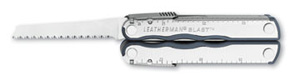
A process which nearly killed all four of us.
Use a jigsaw.
But the dish works beautifully. We didn't even bother aiming or optimising it, just chucked it out, pointed at a tree, with the dongle kind of in there somewhere, peaked out at over 100 kilobytes per second. Nearest cell phone tower was I think about twelve kilometres away, down a rather bushy river valley.
Cost about NZ$20 in materials (plywood, mesh, cable ties, screws), took a couple days to make, but really only because of the lack of proper power tools.
And in the interest of open source, here's the schematic: (click for large view and or download the jpeg)

Construction is pretty simple.
First, mark out the templates on plywood. You'll need 4 of the red one, 4 of the blue one, and 2 of the green.This is if you want to make the 1.5 square meter dish, you'll need to scale the numbers for different sizes.
To draw the parabolas the easiest way is to get yourself some light chain. When a chain hangs it makes a catenery curve, which is reasonably close to a parabola.
1. Mark off a length of chain as described on the template (135 cm for the blue, 160 for green).
2. Attach that length to the ply at the points marked, making sure they are the right distance apart.
3. Spraypaint over the chain to mark it's curve.
Cut out the templates with a jigsaw or similar.
Slot them all together, like so:

The easiest way to firmly attach everything is just drill some holes in apprpriate places and cable tie it all togrther.
Then attach your chicken mesh. If you're using this to receive 3G mobile/internet signal you'll want to have the mesh size no larger than 40 mm diameter. We figured that out using wikipedia and maths.
1. Drill 4 or 5 holes in the ply per gap, near the curve where the mesh will be attached.
2. Get yourself a bunch of cable ties.
3. Cut off a rectangle of mesh to cover half the dish.
4. Press the mesh into the cradle so that the point halfway along one side sits right in the middle.
5. Attach this point with a cable tie.
6. Work your way out in an expanding circle, pressing the mesh into the cradle and attaching with ties until the whole thing is locked down, including the circle perimeter. Don't worry about getting this perfect, it's not a mirror, and is pretty forgiving.
7. Repeat for the other half of the dish, overlaps are fine, but you can trim them off if you like.
Now attach two lengths of string tight from the sides of the circle, so you know where your centre is, and can attach your dongle/antenna/mobile there.
You're done!
Chuck it somewhere appropriate.
You can download the 3d model and schematics here:
Rhino3D 3dm file 203 kB
Google Sketchup 3DS file 39 kB
If this was helpful in some way, please let me know.
My father had the idea of some kind of reflector with a Telecom (unfortunately the only mobile provider in the area, my god do they suck, don't even get me started) 3G mobile USB modem dongle thing. To test the principle we did a lap of the community with a borrowed dongle and a frying pan, and managed to get a basic connection within ten minutes of hunting.
So, confident that it would work with a larger reflector my wwoofers and me set about making this:

and, because no one had told us about the spare jigsaw we could've used, all the curves of which were cut with this:
A process which nearly killed all four of us.
Use a jigsaw.
But the dish works beautifully. We didn't even bother aiming or optimising it, just chucked it out, pointed at a tree, with the dongle kind of in there somewhere, peaked out at over 100 kilobytes per second. Nearest cell phone tower was I think about twelve kilometres away, down a rather bushy river valley.
Cost about NZ$20 in materials (plywood, mesh, cable ties, screws), took a couple days to make, but really only because of the lack of proper power tools.
And in the interest of open source, here's the schematic: (click for large view and or download the jpeg)

Construction is pretty simple.
First, mark out the templates on plywood. You'll need 4 of the red one, 4 of the blue one, and 2 of the green.This is if you want to make the 1.5 square meter dish, you'll need to scale the numbers for different sizes.
To draw the parabolas the easiest way is to get yourself some light chain. When a chain hangs it makes a catenery curve, which is reasonably close to a parabola.
1. Mark off a length of chain as described on the template (135 cm for the blue, 160 for green).
2. Attach that length to the ply at the points marked, making sure they are the right distance apart.
3. Spraypaint over the chain to mark it's curve.
Cut out the templates with a jigsaw or similar.
Slot them all together, like so:

The easiest way to firmly attach everything is just drill some holes in apprpriate places and cable tie it all togrther.
Then attach your chicken mesh. If you're using this to receive 3G mobile/internet signal you'll want to have the mesh size no larger than 40 mm diameter. We figured that out using wikipedia and maths.
1. Drill 4 or 5 holes in the ply per gap, near the curve where the mesh will be attached.
2. Get yourself a bunch of cable ties.
3. Cut off a rectangle of mesh to cover half the dish.
4. Press the mesh into the cradle so that the point halfway along one side sits right in the middle.
5. Attach this point with a cable tie.
6. Work your way out in an expanding circle, pressing the mesh into the cradle and attaching with ties until the whole thing is locked down, including the circle perimeter. Don't worry about getting this perfect, it's not a mirror, and is pretty forgiving.
7. Repeat for the other half of the dish, overlaps are fine, but you can trim them off if you like.
Now attach two lengths of string tight from the sides of the circle, so you know where your centre is, and can attach your dongle/antenna/mobile there.
You're done!
Chuck it somewhere appropriate.
You can download the 3d model and schematics here:
Rhino3D 3dm file 203 kB
Google Sketchup 3DS file 39 kB
If this was helpful in some way, please let me know.
Saturday, 2 July 2011
Not sure if it'll be of use, but if any of you use CAD, here is the full 3d model of the most recent solarflower prototype.
Versions:
3dm - Rhino3d file, what it was built in so most detailed.
http://www.solarflower.org/store/solarflower_02-07-11_rhino3dm.zip
iges - nurbs surfaces only, so missing 12 threaded bolt objects.
http://www.solarflower.org/store/solarflower_02-07-11_iges.zip
obj - low resolution polygon version. Quick to view but lowest quality version.
http://www.solarflower.org/store/solarflower_02-07-11_obj.zip
3ds - same poly version as above, smaller file, and I'm pretty sure you can load this directly into Google Sketchup (free and easy 3d package/viewer)
http://www.solarflower.org/store/solarflower_02-07-11_3ds.zip
Versions:
3dm - Rhino3d file, what it was built in so most detailed.
http://www.solarflower.org/store/solarflower_02-07-11_rhino3dm.zip
iges - nurbs surfaces only, so missing 12 threaded bolt objects.
http://www.solarflower.org/store/solarflower_02-07-11_iges.zip
obj - low resolution polygon version. Quick to view but lowest quality version.
http://www.solarflower.org/store/solarflower_02-07-11_obj.zip
3ds - same poly version as above, smaller file, and I'm pretty sure you can load this directly into Google Sketchup (free and easy 3d package/viewer)
http://www.solarflower.org/store/solarflower_02-07-11_3ds.zip
Wednesday, 29 June 2011
The website is up! Still very much a work in progress, but it's there. Let me know what you think...
http://solarflower.org/
http://solarflower.org/
Tuesday, 21 June 2011
Good lord, I have been terrible with keeping this blog up to date, I never even mentioned the first free construction workshop.


About ten people involved, three days to source materials and tools, six days to complete, NZ$110 total cost. Thanks to the Riverside community for hosting and making available the workspace. It was originally going to be taking place at the Tui community over in Golden Bay, but that fell apart at the last moment while I was attending the New Zealand national permaculture hui at Riverside, so I was luckily able to lash something together there on the fly. It actually turned out a stroke of luck, as trying to do all this over in Tui would've been a nightmare due to lack of access to people and resources.


About ten people involved, three days to source materials and tools, six days to complete, NZ$110 total cost. Thanks to the Riverside community for hosting and making available the workspace. It was originally going to be taking place at the Tui community over in Golden Bay, but that fell apart at the last moment while I was attending the New Zealand national permaculture hui at Riverside, so I was luckily able to lash something together there on the fly. It actually turned out a stroke of luck, as trying to do all this over in Tui would've been a nightmare due to lack of access to people and resources.
So in case you haven't heard the festival trip has been cancelled due to lack of funds.
But fear not! The SolarFlower World Tour will still of course be happening, just now after the summer and not involving a vanload of hippies touring Europe's festivals all summer for free.
Oh well.
So what I'm doing instead, at least for the next couple of months is:
http://urbangreenhouse.blogspot.com/2011/06/announcing-paris-urban-farming.html
setting up an urban farming collective in Paris. Because why not.
So if you're around, let me know. We can build some greenhouses.
I may end up doing another construction workshop while I'm here, and definitely have to get the now infamous tutorials finally completed, but otherwise generally I'll be posting updates to the greenhouse blog until I get back into the solar, probably in Turkey round Octoberish(?)
But fear not! The SolarFlower World Tour will still of course be happening, just now after the summer and not involving a vanload of hippies touring Europe's festivals all summer for free.
Oh well.
So what I'm doing instead, at least for the next couple of months is:
http://urbangreenhouse.blogspot.com/2011/06/announcing-paris-urban-farming.html
setting up an urban farming collective in Paris. Because why not.
So if you're around, let me know. We can build some greenhouses.
I may end up doing another construction workshop while I'm here, and definitely have to get the now infamous tutorials finally completed, but otherwise generally I'll be posting updates to the greenhouse blog until I get back into the solar, probably in Turkey round Octoberish(?)
Subscribe to:
Posts (Atom)